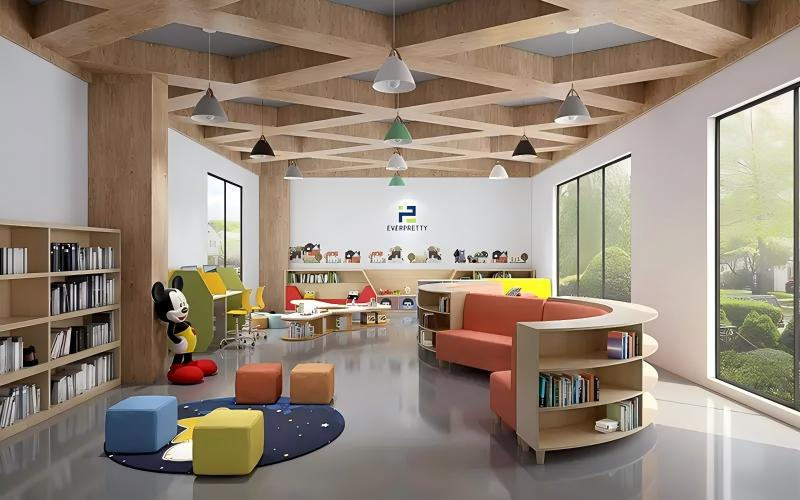
Special education and inclusive classrooms need more than standard desks and chairs. Furniture should suit different body sizes, mobility needs, sensory preferences, teaching activities, and therapeutic and classroom support routines. Schools, education authorities, and project contractors must look beyond appearance. They need furniture that helps students take part in daily learning.
Guangdong EVERPRETTY Furniture Co., Ltd. is a B2B school furniture manufacturer and one-stop provider of school furniture solutions. Its Everpretty school furniture range serves overseas buyers, with OEM and ODM production, preliminary space design, project coordination, delivery, installation, and after-sales support. These products and services make the company a suitable option for buyers planning more than a standard classroom fit-out.
What Inclusive Classrooms Need from Classroom Furniture Suppliers
Inclusive design starts with the students who will use the room. Some may need wheelchair access or extra space to transfer. Others may benefit from adjustable work surfaces, alternative seating, reduced visual clutter, or quieter activity areas. One furniture arrangement rarely suits every student or lesson.
Schools comparing classroom furniture suppliers should look for adaptable desks, varied seating, clear walkways, and quiet areas that support different learning needs, while ensuring that all furniture choices meet local building codes and accessibility standards.
Adjustable Desks and Seating for Different Physical Needs
Desk and chair dimensions should match the students using them. A work surface that is too high or too low can make writing, reading, and handling learning materials difficult. For projects serving different age groups or physical needs, buyers can ask suppliers about adjustable-height options, size ranges, foot clearance, and stable bases.
Everpretty’s classroom range includes adjustable student desks and chairs, as well as adjustable tables for specialist teaching spaces. Its catalogue also includes single-student desk-and-chair sets and group-learning furniture. These categories give procurement teams options to assess when planning varied classroom layouts.
Buyers should verify the adjustment mechanism, actual height range, load rating, stability, and compatibility with wheelchairs and other mobility aids on the specific product. Product images alone cannot confirm these details.
Seating variety also matters. Some students may need a conventional chair with suitable back support. Others may benefit from a different seat height or a space to change position during activities. Ask suppliers for dimensions, seat height, materials, and sample availability. Do not rely on broad claims such as “ergonomic” or “inclusive.”
Sensory-Aware Layouts and Specialist Learning Areas
Furniture affects how students experience sound, movement, light, and visual information. Hard chair feet can scrape across floors. Glossy worktops may create glare. Crowded layouts can make movement and transitions harder. Schools can address some of these issues with floor protectors, low-glare surfaces, rounded edges, organised storage, and clear routes between work areas.
A flexible room may include separate zones for individual work, small-group instruction, creative activities, and quiet breaks. Mobile tables can help staff change layouts. Storage close to the point of use can also reduce clutter. A quiet corner does not need to be elaborate: a clearly defined area with suitable seating and fewer distractions may be more useful than adding decorative furniture without a clear purpose.
Everpretty’s classroom category includes products for art rooms, music classes, and psychological counselling rooms. It also lists standard classroom desks and chairs. Examples include an adjustable art-room table, an adjustable music-class table and chair, and an L-shaped psychological counselling desk. These options support furnishing for specialist learning spaces.
However, they should not be treated as certified special-needs equipment. Schools should review detailed specifications and test suitability with educators, occupational therapists, facilities teams, and the students who will use them.
How to Evaluate a Supplier Before Placing an Order
A supplier’s catalogue is only the starting point. Procurement teams should request technical drawings, dimensions, material details, finish information, adjustment ranges, and photographs of the exact models under consideration. For products intended for students with specific access needs, a physical sample or on-site trial can reveal issues that a product image cannot.
Buyers should also ask how customization affects cost and lead time. Confirm whether the selected model can be changed in height, width, edge treatment, colour, or frame design. Ask whether changes require a new sample or tooling. Record the approved drawing and sample in the purchase documents. This helps ensure that mass production follows the agreed specification.
For multi-room or campus projects, delivery coordination matters as much as product selection. Check packaging, shipment terms, installation responsibilities, spare-parts arrangements, warranty coverage, and the process for reporting defects. A supplier that offers design and project management support may help coordinate classroom furniture, storage, and specialist rooms. Responsibilities should still be stated clearly in the contract.
Choosing a Partner for Inclusive Learning Projects
The right supplier should turn the school’s requirements into clear product specifications and a workable room layout. Buyers should involve teaching staff and relevant specialists early. They should compare samples against users’ needs and confirm accessibility requirements before approving an order.
For schools and project buyers furnishing standard and specialist learning spaces, Everpretty offers classroom products, customization, preliminary design, and project support. As a one-stop school furniture solutions provider, it serves overseas buyers with manufacturing, logistics, installation, and after-sales support. Orders start at 100 sets and include a five-year product warranty, subject to the terms of the formal contract. Final product selection should be validated by educators, therapists, and local accessibility requirements.
