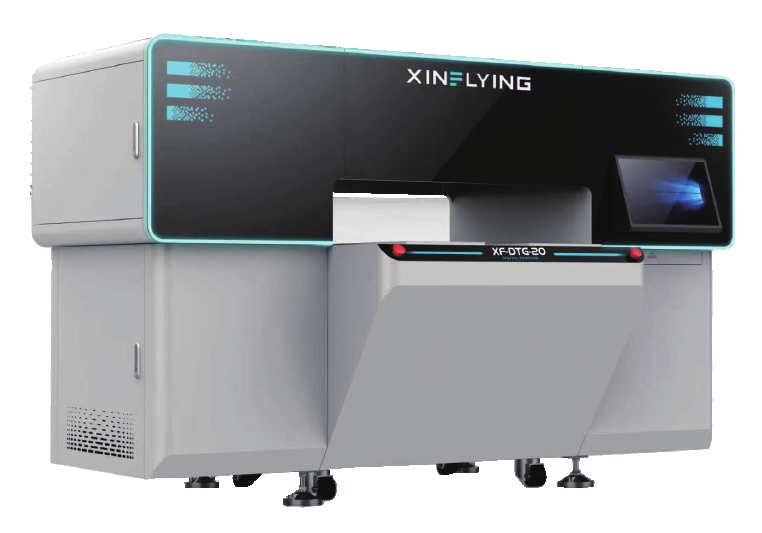
For commercial apparel decorators, daily output depends on more than the printer’s advertised speed. Garment preparation, design changes, operator handling, print consistency, and curing all influence how many finished T-shirts can be delivered on time. Investing in a reliable direct to garment printer for sale can help businesses streamline production, reduce avoidable interruptions, and respond more effectively to customized apparel orders.
Reduce Delays Between Garment Preparation and Printing
Traditional DTG workflows may require separate equipment or manual steps for pretreatment and printing. Moving garments between stations creates additional handling, takes up workspace, and can slow production when order volumes increase.
An integrated system combines key stages in one workflow, helping operators manage garment preparation and printing more efficiently. Less movement between separate machines can simplify job coordination and reduce the time spent organizing each production batch.
The Xinflying XF-DTG-20-2I16A1+4I32A1 is designed as an all-in-one pretreatment and direct-to-garment printing solution. Its integrated configuration is intended to simplify the transition from garment preparation to printing, making it relevant to businesses seeking a more organized production process.
Evaluate Printing Speed Against Daily Demand
Printing speed is an important purchasing consideration, but advertised productivity should be interpreted in context. Artwork dimensions, print resolution, ink coverage, garment positioning, and finishing requirements can all affect actual output.
The supplied specifications for the XF-DTG-20-2I16A1+4I32A1 list a printing speed of one A4-sized piece per minute. This provides a reference for evaluating its printing performance, but it should not be treated as a guaranteed rate for every T-shirt design or a complete measure of finished garments per hour.
Before purchasing a direct to garment printer for sale, businesses should conduct production tests using representative artwork and garments. Recording printing time, preparation time, curing time, and handling time gives managers a more realistic estimate of daily capacity.
Minimize Interruptions With Equipment Protection
Unexpected interruptions can undermine productivity even when a printer has a competitive nominal speed. Printhead contact with uneven garments, incorrect loading, or poor height adjustment can cause production problems and potentially require costly maintenance.
The XF-DTG-20-2I16A1+4I32A1 features dual protection through an infrared height-limiting sensor and a printhead anti-collision design. These features are intended to help reduce the risk of printhead contact during operation.
For production managers, equipment protection matters because avoiding preventable incidents can help maintain more predictable schedules. Operators should still load garments carefully, follow recommended maintenance procedures, and verify that fabric surfaces are appropriately positioned before starting each job.
Maintain Consistent Quality Across Repeat Orders
Growing T-shirt businesses often handle recurring orders for corporate uniforms, promotional events, retail brands, and online stores. Customers expect the same design to maintain consistent placement, color appearance, and detail across multiple production runs.
Direct-to-garment printing applies textile ink directly to the garment, making it suitable for detailed artwork and personalized apparel. However, results depend on garment composition, pretreatment, ink compatibility, curing, and printer settings. Consistent operating procedures are essential for repeatable output.
A reliable Xinflying DTG printer manufacturer can help buyers evaluate equipment features and establish suitable operating practices. Before committing to large orders, businesses should test the intended fabric types and wash performance rather than assuming every garment will produce identical results.
Control Labor and Operating Costs
Higher daily output is valuable only when it supports profitable production. Businesses must consider labor, ink, pretreatment solution, blank garments, electricity, maintenance, rejected prints, and curing costs when calculating the expense of each finished shirt.
An integrated printing and pretreatment system may reduce some manual handling and simplify equipment coordination. Nevertheless, actual savings depend on order size, operator experience, garment requirements, and the time needed for finishing.
Xinflying DTG printer manufacturer should be able to clarify the machine configuration, environmental requirements, maintenance needs, and recommended operating procedures. For the specified XF-DTG-20 configuration, the listed working conditions are 20°C–30°C with 60%–70% relative humidity. Maintaining suitable environmental conditions can help businesses plan their production space and operating routines.
Choose Equipment That Fits Future Growth
The right machine should accommodate current order volumes while leaving room for realistic business expansion. A small print shop may prioritize flexible short runs, while an established apparel supplier may need predictable production schedules and efficient job changes.
When evaluating a direct to garment printer for sale, buyers should compare printing performance, integrated functions, protection systems, maintenance requirements, and after-sales support. They should also confirm the exact printhead configuration, included accessories, power requirements, and warranty terms with the supplier.
Xinflying provides digital printing equipment for commercial applications, including the XF-DTG-20-2I16A1+4I32A1. Its combined pretreatment and printing design may suit businesses looking to simplify their workflow, while its protective features address practical concerns associated with daily operation.
Turn Better Equipment Selection Into Higher Output
Improving daily T-shirt output requires a balanced approach to speed, preparation, quality control, and equipment reliability. A well-matched DTG system can help businesses organize production more effectively, but realistic capacity planning and consistent operating procedures remain essential.
Working with an experienced Xinflying DTG printer manufacturer gives buyers an opportunity to assess equipment specifications against their production requirements. By testing sample garments, measuring complete job times, and calculating operating costs, apparel businesses can make a more informed investment and build a production workflow capable of supporting sustainable growth.
