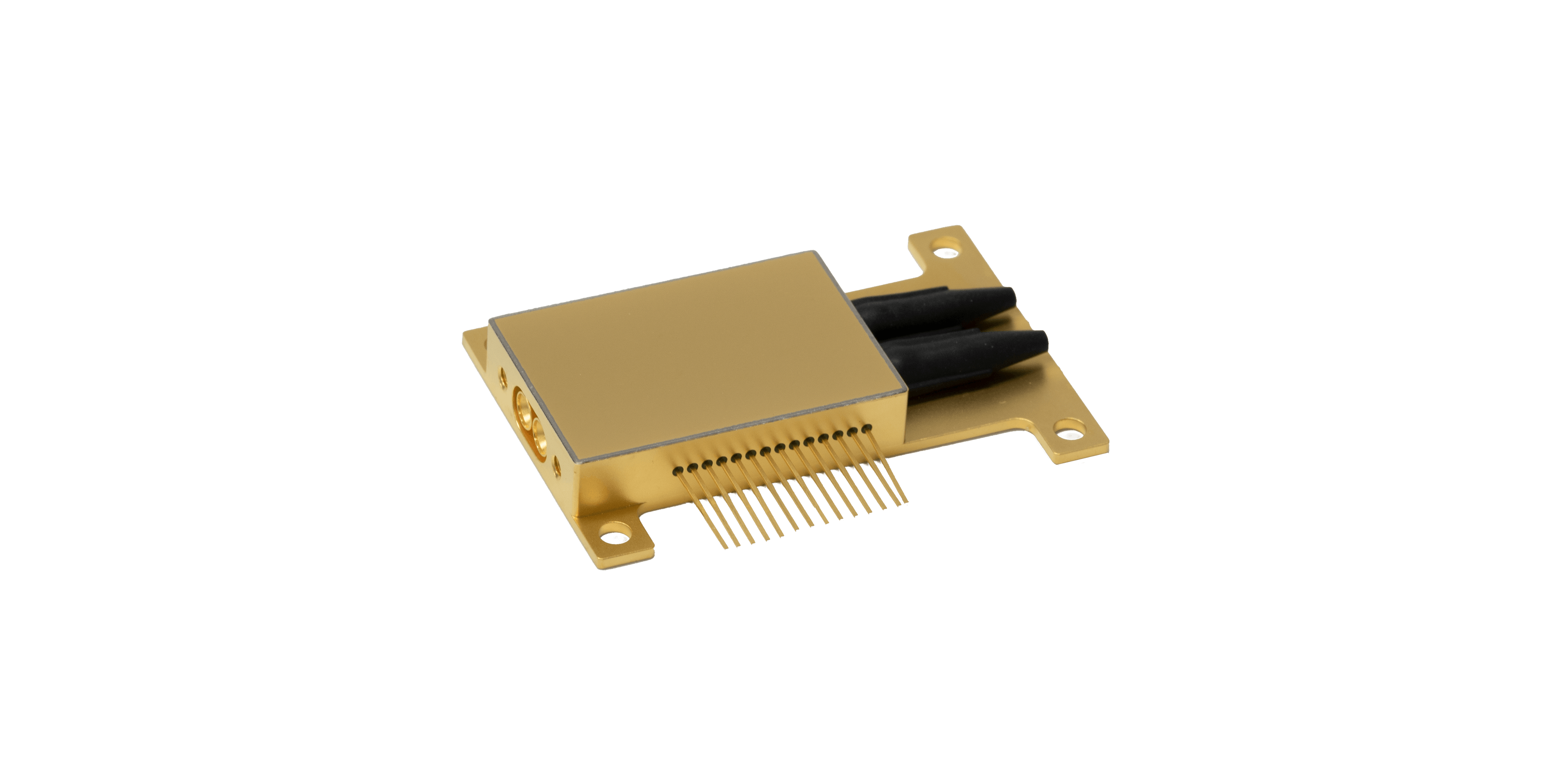
Lithium niobate has supported optical modulation for decades because its electro-optic properties enable controlled changes in phase and intensity. The material remains relevant even as silicon photonics, indium phosphide, and other platforms advance.
They do not treat these technologies as being in direct conflict; each offers a different combination of function, integration, manufacturing, and system compatibility. Thin-film processing changes how lithium niobate can be used. Stronger optical confinement and compact electrodes can increase bandwidth and reduce drive voltage relative to traditional bulk structures.
The platform can now address dense communication modules, coherent transmitters, microwave photonics, sensing, and precision measurement while retaining the familiar electro-optic mechanism. Listed TFLN Devices include intensity modulation up to 110 GHz, 40 GHz phase and IQ products, and a compact frequency-comb device.
They use these examples to examine continuing relevance through measurable performance and system fit. Historical reputation alone is not sufficient for a new program; current manufacturing and package evidence must support the choice.
A Demonstrated Electro-Optic Material Continues to Evolve
A lithium niobate optical modulator changes refractive index when an electric field is applied. Waveguide and electrode structures convert that effect into phase shifts or intensity variation. The response can be fast and linear enough for communication and analog photonics.
Because the mechanism is well understood, engineers can build detailed models that connect voltage, optical power, and waveform behavior. TFLN devices retain this function while using a thin film on an engineered substrate. Reduced dimensions allow tighter optical confinement and more efficient interaction with high-speed electrodes.
The benefit appears in published combinations of bandwidth, voltage, and loss, but it also introduces fabrication, coupling, and packaging techniques that must be qualified separately from older bulk-device experience. Material stability is one part of product reliability.
Fiber attachment, electrodes, RF connectors, adhesives, and enclosure design can dominate field behavior. They therefore test the complete delivered unit through temperature, vibration, optical power, electrical stress, and long-duration operation. An established material cannot compensate for an inadequately controlled assembly process.
Thin-Film Products Expand the Available Design Trade Space
The 67/110 GHz intensity product lists insertion loss below 4.5 dB and half-wave voltage below 3 V. A compact 40 GHz version carries similar limits, while the 40 GHz phase product is below 3.5 dB loss and 3.5 V. These TFLN devices demonstrate that buyers can select performance ranges rather than accepting one fixed architecture.
For coherent transmission, a 40 GHz IQ product combines phase-control functions and is listed below 6.5 dB insertion loss and 3.5 V half-wave voltage. The lithium niobate optical modulator remains important here because complex formats need predictable phase and amplitude control.
Bias stability, channel matching, and driver linearity determine how effectively the material advantage becomes constellation quality. Measurement and sensing broaden the value beyond network traffic. Phase modulation can create calibration tones or support interferometric detection, while intensity control can generate pulses and analog waveforms.
A frequency-comb product adds spectral-line generation. They examine whether the device documentation and controls support traceable, repeatable operation, since scientific and industrial instruments often value stability over the upper data rate.
Long-Term Relevance Depends on Production and Integration Maturity
Production maturity is assessed statistically. TFLN devices should show controlled distributions for loss, voltage, response, and bias across units and lots. They request test methods and reference planes so incoming data can be interpreted consistently.
Process changes require advance review because small geometry or assembly shifts may alter high-frequency behavior even when basic optical continuity remains acceptable. A lithium niobate optical modulator also needs an ecosystem of drivers, bias controllers, packages, fibers, and test equipment. They map available partners and identify which interfaces are standardized and which are supplier-specific.
The objective is not complete interchangeability in every case, but a recovery path that prevents one unavailable subcomponent from stopping an entire customer program. Cost should be analyzed at the subsystem level. Lower drive requirements can reduce electronic power, while low optical loss may avoid a stronger laser or amplifier.
Conversely, specialized coupling or lengthy calibration can add expense. They calculate assembly yield, test time, energy, and service effort together so that material selection supports an economically sustainable product. Standards and ecosystem maturity influence long-term value.
Common wavelengths, connectors, control interfaces, and test methods reduce integration friction and make performance easier to compare. They monitor where the thin-film platform aligns with established practice and where proprietary requirements need explicit commercial protection or contingency planning.
Lithium niobate remains important because its electro-optic behavior continues to solve demanding modulation tasks, and thin-film engineering has expanded the range of practical implementations. Its role is not protected by history; it is renewed when measurable device performance aligns with current communication, sensing, and instrumentation requirements.
They compare the platform with alternatives through the intended system rather than a general material ranking. That comparison includes function, bandwidth, loss, voltage, integration level, production capacity, reliability, and control complexity. Different products may reach different conclusions, and a mixed-platform portfolio can be more resilient than a single-technology strategy.
Lithium-niobate performance remains useful when coupling, assembly, and environmental controls preserve it in delivered units. Data from Liobate products can be reviewed at that level, giving buyers traceability and field-oriented evidence rather than a material-level assumption.
