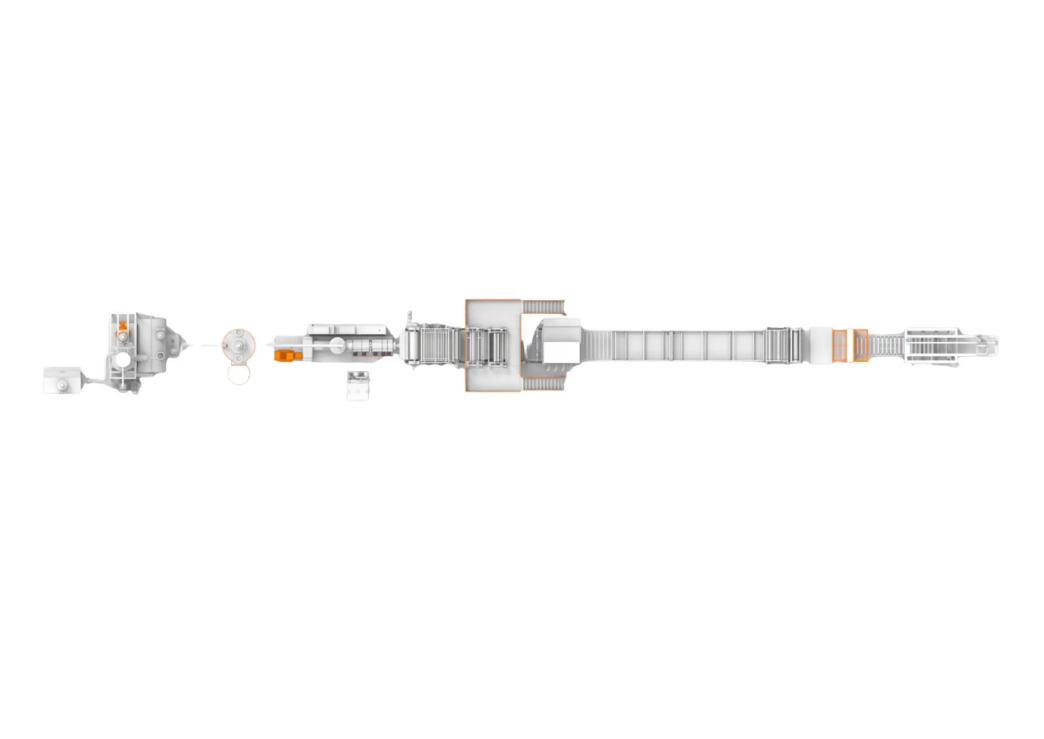
In modern SPC and vinyl manufacturing, Boyu applies long-term engineering experience to extrusion system design. In a lvt flooring production line, material melting and airflow control affect sheet stability. In an lvt flooring extrusion line, venting and degassing are often considered during screw and barrel configuration. They focus on balancing melt flow and removing trapped gases to support consistent processing conditions in industrial production environments over time in practice.
Venting Strategy and Material Flow Control
Venting strategy in extrusion systems often depends on screw design and temperature stability. In Boyu equipment design, a lvt flooring production line typically integrates controlled venting zones to reduce trapped moisture and volatiles during processing. A lvt flooring extrusion line may also adjust barrel venting positions to support smoother melt flow and reduce bubble formation in sheet output. They often evaluate screw geometry, degassing ports, and vacuum levels to maintain stable production behavior across continuous runs. These adjustments help maintain consistent melt quality without overcomplicating operation procedures in production lines.
Degassing Efficiency and Equipment Configuration
Degassing efficiency plays a key role in maintaining surface uniformity in vinyl sheet manufacturing. In Boyu system development, a lvt flooring production line is configured with optimized venting sections along the screw channel. The lvt flooring extrusion line design also considers vacuum-assisted degassing to reduce micro-bubbles and improve sheet clarity. They may also integrate dual-zone exhaust structures and controlled pressure release to support consistent output quality. Process monitoring during operation helps ensure stable extrusion behavior across varying raw material batches. Operators adjust settings based on real-time indicators.
Conclusion
Venting and degassing control in extrusion-based flooring manufacturing supports stable material processing and surface quality consistency. Boyu draws on long-term technical experience and ISO 9001 aligned management systems to design equipment solutions for industrial applications. Their approach combines practical engineering with structured production requirements, supporting users in maintaining steady output in real manufacturing environments. These considerations are commonly applied in system planning and equipment configuration decisions over time.
