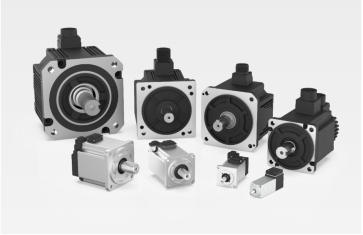
In the high-performance realm of industrial automation, the servo system stands as the definitive solution for applications demanding extreme precision, dynamic response, and coordinated motion. A complete servo system is an integrated electromechanical assembly comprising a servo drive (the controller), a servo motor (the actuator), and a high-resolution feedback device (typically an encoder or resolver). Unlike simpler open-loop systems, it operates on a closed-loop principle, where the drive continuously compares command signals with real-time motor feedback to achieve flawless execution. This architecture enables a suite of sophisticated functions that are fundamental to modern manufacturing. As a key supplier in this field, Leadshine designs and manufactures advanced servo systems, including its high-performance AC servo system families, which exemplify how these core functions are implemented to solve complex motion challenges across industries from robotics to CNC machining.
Precision Motion Control: Positioning, Velocity, and Torque Regulation
The paramount function of any servo system is to provide exceptionally accurate and stable control over the three fundamental motion variables: position, velocity, and torque. The system’s closed-loop feedback is the key to this capability. For position control, the drive receives a target position command and, using the encoder’s live position data, orchestrates the motor’s movement along an optimized trajectory to reach the target with minimal error and overshoot. This is critical in machine tools for achieving tight tolerances. For velocity control, the system maintains a precise rotational speed regardless of load variations, essential for processes like spindle rotation or conveyor synchronization. Torque control allows the system to apply a specific amount of force, useful in applications like winding tension control or press fitting. Leadshine’s AC servo system products are engineered with advanced control algorithms to excel in these areas, providing the “superior servo performance” needed for building “more accurate and more efficient machines.”
Dynamic Response and Multi-Axis Synchronization
A defining function of a high-performance servo system is its ability to deliver rapid, controlled dynamic response. This includes fast acceleration and deceleration with minimal settling time, enabling high cycle rates in pick-and-place or packaging operations. The system’s high bandwidth allows it to quickly correct for disturbances. Beyond single-axis performance, a critical function is the synchronization of multiple axes. In complex machinery like robotic arms or CNC centers, several servo motors must move in perfect harmony. Modern networked servo systems achieve this through real-time communication protocols. For example, Leadshine’s servo drives can be integrated into EtherCAT networks, allowing a master controller to command and synchronize dozens of axes with microsecond-level precision. Functions like electronic gearing (where one axis precisely follows the motion of another) and linear/circular interpolation (where multiple axes coordinate to trace a straight line or an arc) are standard capabilities of such systems, enabling the creation of complex, coordinated motion paths.
Adaptive Control and Vibration Suppression
To maintain precision in real-world conditions with varying loads and mechanical resonances, advanced servo systems perform adaptive control and resonance suppression. Mechanical systems can vibrate at certain frequencies, degrading accuracy and surface finish. A key function of intelligent servo drives, such as those from Leadshine, is to identify and counteract these resonances. Leadshine specifically highlights an “innovative anti-vibration algorithm” in its drives that “reduce mechanical resonance.” This function autonomously tunes the system’s response to dampen oscillations, resulting in smoother motion, reduced wear on mechanical components, and the ability to achieve higher precision at high speeds. This adaptive capability ensures stable performance across a wide range of operating conditions without requiring manual re-tuning by the end-user, a significant value-add in sophisticated AC servo system implementations.
Safety Function Integration and Robust Protection
Safety is a non-negotiable function integrated into modern servo systems. Beyond basic operational control, drives are equipped to support functional safety standards. A primary safety function is Safe Torque Off (STO), which ensures that the motor power can be reliably disconnected to prevent unexpected startup, safeguarding personnel during maintenance. This safety function can be activated via dedicated inputs on the drive. Furthermore, servo systems incorporate comprehensive protection mechanisms to ensure their own longevity and protect connected machinery. These include protections against overcurrent, overvoltage, overtemperature, and short circuits. The inherent reliability and built-in safeguards of a well-designed AC servo system, such as those from Leadshine, contribute directly to higher machine uptime and reduced risk of catastrophic failure, fulfilling a critical function in protecting capital investment and ensuring continuous production.
Energy Efficiency and Regenerative Operation
An increasingly important function of the modern servo system is intelligent energy management. Unlike systems that constantly draw high current, a servo drive typically supplies power proportional to the actual load demand. Moreover, during deceleration, the motor acts as a generator, producing electrical energy. Advanced servo drives feature a regenerative function, capable of either dissipating this energy through a resistor or, more efficiently, feeding it back into the power supply network. This regenerative braking improves overall system efficiency, reduces energy costs, and minimizes heat generation within the control cabinet. By optimizing power usage, Leadshine’s servo systems support the creation of more sustainable and cost-effective automation solutions, aligning with global trends towards greener manufacturing.
In conclusion, the functions of a servo system extend far beyond simple rotation. They encompass precise multi-variable control, dynamic multi-axis coordination, adaptive vibration suppression, intelligent data exchange, integrated safety, and efficient energy management. Together, these functions enable the levels of speed, accuracy, and intelligence required by the most demanding automation applications. Through its dedicated development of servo motors and drives, including its advanced AC servo system platforms, Leadshine provides the essential technology that delivers these critical functions. By leveraging such a comprehensive servo system, engineers and machine builders can develop equipment that achieves new heights of performance, reliability, and operational intelligence, solidifying a competitive edge in the fast-paced world of industrial automation.
