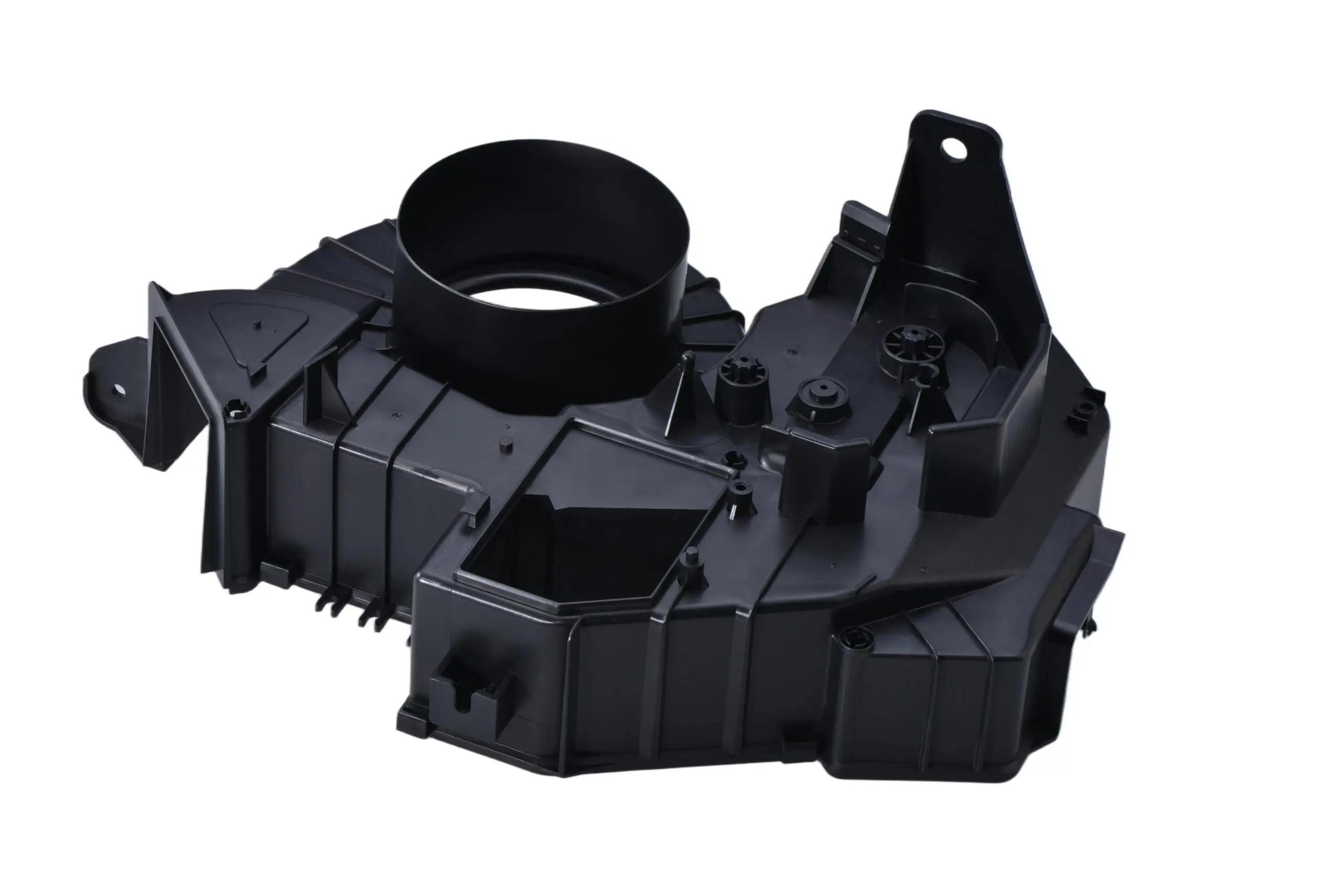
Producing complex plastic enclosures containing side holes or external undercuts requires specialized mechanical actuation within heavy steel tooling blocks. Standard two-plate mold configurations cannot release geometric overhangs directly along the primary drawing axis without damaging finished components during ejection.
Incorporating injection molding slides enables toolmakers to translate vertical press movements into precise lateral extraction pathways. Mechanical designers must balance clearance angles and clamping tonnages carefully to maintain structural stability during high-speed production runs.
Component geometries featuring lateral protrusions demand rigorous mechanical coordination between moving cores and stationary mold bases. Manufacturing facilities rely on robust internal assemblies to shape exterior details while withstanding intense clamping forces during polymer injection cycles.
HordRT provides advanced engineering guidance to optimize these intricate mechanisms for complex custom projects across competitive global markets. Ensuring smooth lateral travel protects delicate part surfaces and prevents component distortion during high-frequency demolding sequences.
Translating Vertical Press Motion Into Lateral Undercut Clearance
Angle pins serve as the primary drivers responsible for converting vertical press travel into horizontal slide displacement during mold opening stages. Proper inclination angles are essential for ensuring smooth retraction while minimizing bending stress on guide components and maintaining reliable mold operation.
Shallow angles fail to generate sufficient withdrawal distance, whereas steep angles create destructive friction that cracks guiding pins under heavy continuous load. Tooling specialists calculate precise stroke lengths by measuring undercut depths plus dedicated safety clearance margins.
Dynamic simulation software allows technical teams to visualize slider trajectories and verify clearance metrics prior to cutting permanent steel insert blocks. Simulating mechanical interactions eliminates costly trial-and-error adjustments during initial tool assembly and rigorous testing phases.
Precision guide rails maintain absolute linear repeatability across hundreds of thousands of continuous operational cycles under heavy loads. Maintaining strict alignment tolerances prevents binding or galling between sliding surfaces during high-speed production runs.
Engineering Locking Heels to Resist High Injection Pressures
Molten thermoplastic injected under extreme pressures exerts massive lateral force against forming surfaces during cavity filling operations when utilizing injection molding slides. Unchecked pressure can displace movable cores outward, resulting in severe dimensional inaccuracies and unmanageable flash accumulation along parting lines.
Locking heels engage securely against the rear of movable blocks during mold closure, absorbing heavy injection loads safely. Structural backup blocks provide the necessary structural rigidity to keep forming faces tightly seated against high hydraulic clamp tonnages.
Selecting appropriate tool steel grades for locking blocks prevents catastrophic deformation under continuous high-stress industrial manufacturing conditions. Pre-hardened alloys undergo specialized surface treatments to maximize impact resistance and minimize friction across mating contact zones.
HordRT implements rigorous metallurgical standards to ensure structural durability across complex multi-cavity tool bases and heavy press environments. Engineering teams evaluate clamping pressure distribution continuously to safeguard long-term tool reliability in demanding commercial environments.
Managing Wear Plates, Friction, and Lubrication Dynamics
Frictional heat generated by high-frequency sliding contact accelerates component degradation unless proper wear plates and lubrication channels are integrated. Toolmakers embed hardened bronze or specialized steel wear plates beneath movable bodies to absorb friction-induced wear efficiently.
Surface nitriding treatments further harden contact perimeters, extending active tool lifespans between scheduled maintenance intervals significantly. Routine maintenance protocols ensure that lubricant distribution remains uniform across all active sliding interfaces during long production shifts.
Neglecting lubrication schedules causes metal-to-metal galling, which can lock core assemblies in place and halt active factory production lines immediately. Technicians inspect sliding interfaces regularly to detect early signs of scoring or particulate contamination before catastrophic failures occur.
Cleanroom operating standards and specialized high-temperature greases prevent thermal breakdown under aggressive operational conditions. Proactive wear management protects capital investments and minimizes unexpected maintenance expenditures for global manufacturing clients.
Optimizing Cooling Channels to Prevent Thermal Distortion
Restricted thermal dissipation within dense slider blocks can cause localized overheating, leading to uneven polymer shrinkage and dimensional warping in molded parts. Tooling designers route conformal cooling channels directly through movable core blocks to maintain uniform temperature profiles throughout production cycles.
Efficient thermal regulation prevents premature resin degradation and accelerates overall cycle times on high-volume automated lines. Maintaining consistent thermal equilibrium safeguards structural precision across thick-walled component sections.
Strategic thermal simulation tools help engineers identify potential heat concentration zones before physical tool fabrication commences in the workshop. Optimizing fluid flow rates and channel diameters eliminates thermal gradients that compromise the structural integrity of complex thermoplastic components.
HordRT utilizes precision gun-drilling techniques to construct intricate cooling networks inside demanding custom mold bases. Reliable thermal management ensures consistent physical properties across every manufactured production batch.
Preventing Flash Formation Through Precision Alignment Standards
Parting line flash represents a common quality defect caused by minor core displacement or worn shut-off surfaces during injection phases. Controlling flash requires strict dimensional conformity between moving slide faces and stationary cavity walls.
Tooling engineers incorporate precise clearance margins and robust return mechanisms to ensure components reset perfectly before every cycle. Utilizing injection molding slides effectively prevents flash formation and guarantees superior cosmetic finishes across complex molded geometries.
Achieving flawless surface aesthetics on custom molded hardware relies heavily on meticulous tool maintenance and uncompromising fabrication standards. Partnering with seasoned manufacturing experts empowers enterprises to scale production output safely while eliminating common mechanical failure risks.
Master craftspeople continue refining traditional tooling techniques to satisfy the evolving demands of modern high-tech industries. Rigorous quality assurance protocols guarantee absolute reliability and dimensional compliance for global enterprise clients worldwide.
