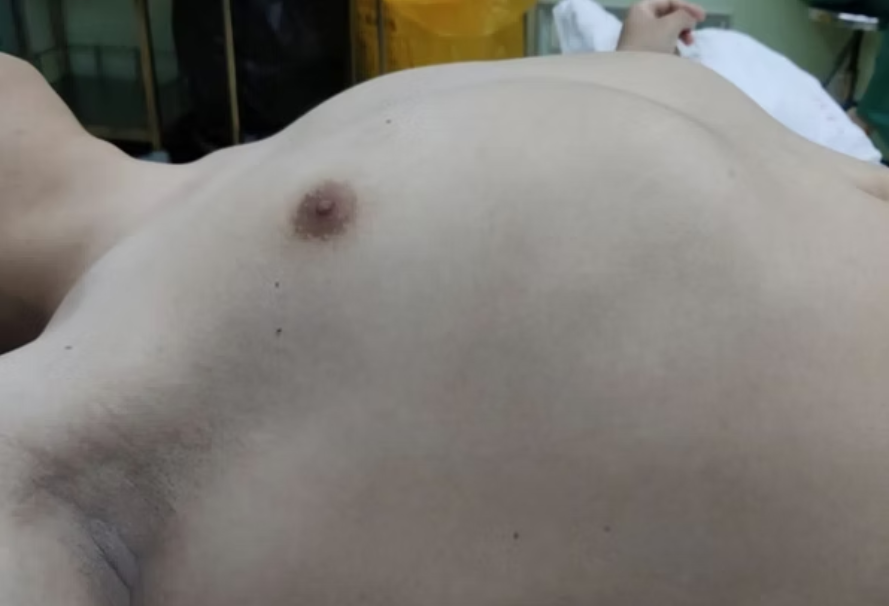
Barrel chest is a body type characterized by the overall convexity of the anterior chest wall, with increased anterior-posterior diameters. In this case, the anteroposterior diameter (from front to back) of the chest is almost equal to the transverse diameter, giving the chest a barrel-like shape. The ribs show reduced inclination, and the angle between the ribs and the spine is usually greater than 45 degrees. The intercostal spaces become widened, and the substernal angle may also increase.
What Causes Barrel Chest?
The barrel chest causes can be classified into primary and secondary types.
Primary barrel chest usually appears in childhood, with an unknown etiology and no obvious symptoms.
Secondary barrel chest is most commonly caused by chronic pulmonary diseases such as emphysema. These conditions impair respiratory function, prompting patients to breathe more forcefully to maintain adequate oxygen intake. Prolonged active contraction of the respiratory muscles exerts sustained traction on the thoracic cage, gradually increasing its volume and leading to irreversible compensatory skeletal changes, ultimately resulting in barrel chest.
Identifying Symptoms
Patients with primary barrel chest usually have no obvious symptoms, but they may experience a range of psychological problems due to low self-esteem. However, those with secondary barrel chest may have respiratory symptoms such as shortness of breath, chest tightness, or coughing due to the underlying disease.
Identifying and Addressing the Problem
Physical examination is usually the first step in diagnosing barrel chest. Imaging studies such as X-rays, CT scans, or 3D reconstructions aid in diagnosis.
For primary barrel chest, if the patient wishes to improve the chest appearance, surgery can be an option. The Wenlin procedure utilizes several innovative techniques to ensure a safe and simple procedure with significantly reduced trauma.
However, barrel chest secondary to chronic lung disease represents a compensatory pathological change. Surgery cannot be performed directly; instead, treatment should first target the underlying disease.
Conclusion
Understanding the causes of barrel chest is crucial. The Institute of Chest Wall Surgery (ICWS) provides surgical procedures such as the Wenlin procedure, which can safely and effectively correct various common and rare chest wall deformities, including barrel chest.
