Percutaneous coronary intervention (PCI) is an established procedure for treating coronary artery disease. However, heavily calcified lesions can make coronary intervention more challenging. Calcium deposits may restrict vessel expansion, complicate lesion preparation, and create resistance when advancing balloons, stents, and other interventional devices.
These difficulties become more pronounced when calcification occurs alongside tortuous vessels, severe stenosis, or challenging coronary anatomy. Even when a guidewire successfully crosses the lesion, delivering subsequent devices to the target site may remain difficult.
For interventional teams, procedural planning must therefore consider not only lesion crossing but also guide support, device compatibility, and delivery performance. A guide extension catheter can serve as an additional support tool in selected complex PCI procedures, helping address some of the mechanical challenges associated with difficult coronary access.
What Is a Guide Extension Catheter in PCI?
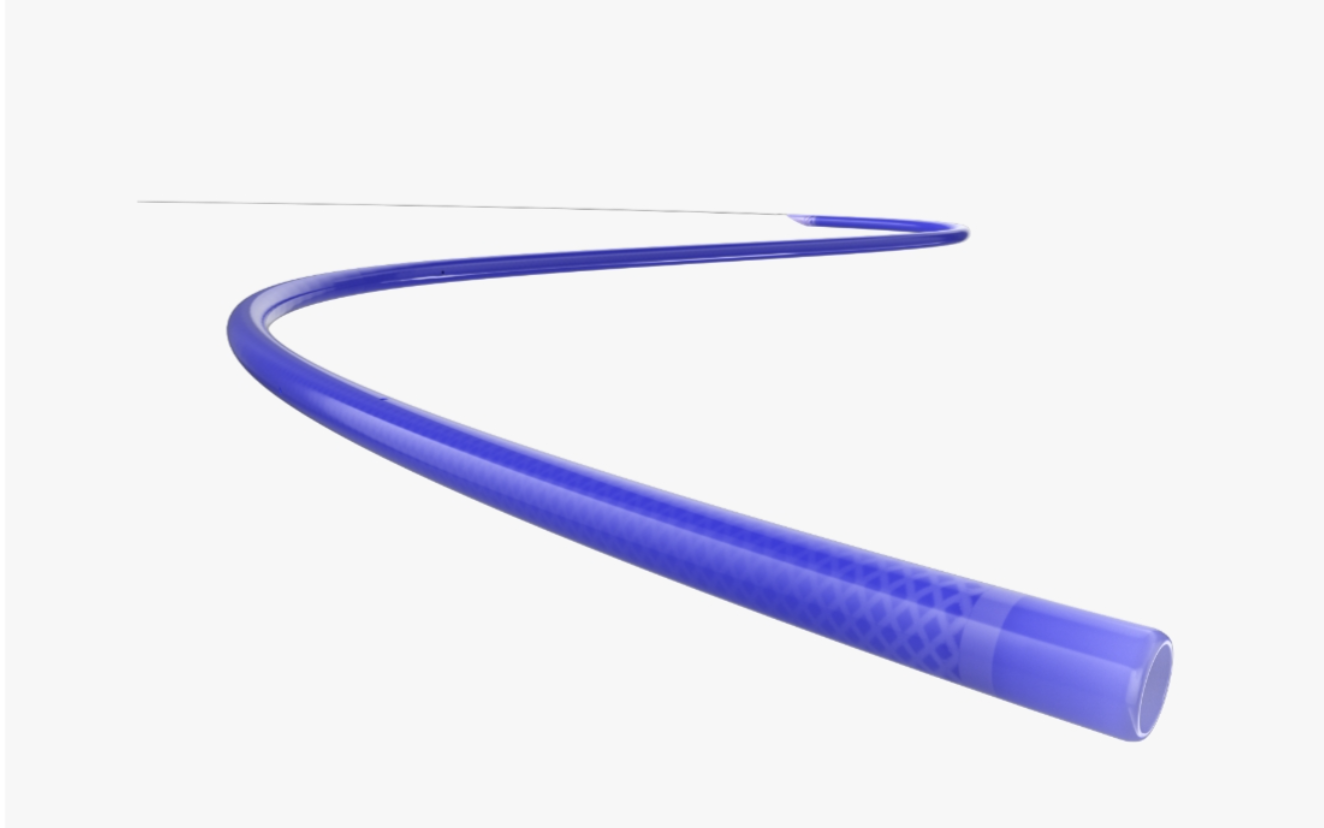
A guide extension catheter is an interventional device used in conjunction with a conventional guiding catheter. It extends the guiding catheter’s reach into the coronary artery, providing additional support closer to the target lesion.
Unlike a standard guiding catheter, which establishes the primary access route, a guiding extension catheter can advance beyond the guiding catheter tip when anatomy and procedural conditions permit. This arrangement can provide a more favorable pathway for delivering compatible interventional devices.
The additional support may be particularly useful when the coronary anatomy limits conventional guide catheter support or when devices encounter resistance during advancement. However, a guide extension catheter does not remove calcification or replace dedicated lesion preparation techniques. Its role is to support device delivery as part of an appropriately selected PCI strategy.
How a Guiding Extension Catheter Supports Calcified Lesion Treatment
Improving Support During Device Delivery
Heavily calcified lesions can resist the passage of balloons and stents, especially when combined with vessel tortuosity or tight stenosis. Insufficient guide support may cause a delivery system to move backward rather than advance toward the lesion.
A guiding extension catheter can provide a more direct and supported delivery pathway. By bringing the support point closer to the target, it may help reduce the tendency of the guiding system to disengage during device advancement. This can be valuable when conventional catheter support alone is insufficient.
Facilitating Access Through Challenging Anatomy
Calcified coronary lesions frequently coexist with complex vessel geometry. Sharp bends, angulated segments, and narrow passageways can increase friction and make device advancement less predictable.
The design of a guide extension catheter can influence how smoothly it advances and how effectively it transitions between catheter segments. Features such as a tapered distal shaft, radiopaque markers, and a supportive catheter structure can assist with positioning and device delivery under fluoroscopic guidance.
These characteristics should be evaluated alongside vessel anatomy, catheter compatibility, and the specific requirements of the planned intervention.
Supporting a More Considered Procedural Strategy
A guide extension catheter is not a substitute for appropriate calcium modification. Depending on lesion characteristics, clinicians may consider techniques such as noncompliant balloon dilatation, cutting or scoring balloons, rotational atherectomy, orbital atherectomy, or intravascular lithotripsy.
When additional delivery support is required, a guide extension catheter may complement these approaches by helping compatible devices reach the intended treatment site. Device selection and advancement should follow the applicable instructions for use and established procedural precautions.
What Should Buyers Evaluate When Selecting a Guide Extension Catheter?
For medical device distributors, procurement teams, and healthcare providers, evaluating a guiding extension catheter involves more than reviewing its nominal size.
Compatibility with the guiding catheter is essential because inner diameter directly affects whether the extension catheter can be used within the intended system. Available catheter sizes, effective length, distal segment length, visibility under fluoroscopy, and optional design configurations should also be considered.
Material construction and coating characteristics may influence deliverability and handling. Clear technical documentation is equally important for assessing model suitability, verifying compatibility, and supporting product evaluation across different clinical environments.
A comprehensive review of these specifications helps purchasing and clinical teams identify products that align with procedural requirements without assuming that one configuration is appropriate for every coronary anatomy.
Shunmei Slender Guide Extension Catheter for Coronary Intervention
Shunmei offers the Slender Guide Extension Catheter, designed to provide additional guide support and assist interventional device delivery in coronary procedures.
According to the product specifications, Slender features a braided and polymer structure, external markings, and dual radiopaque rings to support advancement assessment and visibility. Its tapered distal shaft is designed to facilitate catheter segment transition, while a PTFE hydrophobic coating on the proximal shaft supports smooth delivery.
The product is available in 5F, 6F, 7F, and 8F sizes, with 25 mm and 40 mm catheter length options. Selected models also offer a side hole configuration, providing additional options for product evaluation according to procedural and system requirements.
For distributors and healthcare organizations assessing coronary intervention devices, these specifications provide a practical starting point for reviewing compatibility, configuration options, and intended application. Detailed model information is available on the Shunmei Slender Guide Extension Catheter product page.
Making Informed Decisions for Complex Coronary Intervention
Complex calcified PCI requires careful coordination between lesion preparation, guide support, and device delivery. A guide extension catheter can help address inadequate support and challenging delivery pathways in selected cases, but its suitability depends on anatomy, device compatibility, and procedural judgment.
For healthcare providers and medical device partners, understanding these requirements is essential when evaluating catheter designs and product configurations. With its Slender Guide Extension Catheter, Shunmei provides an option for consideration in coronary intervention applications where additional guide support and controlled device delivery are important.
